
Together with UAB “MODERNIOS E – TECHNOLOGIJOS”, a system was developed that enables the collection of solar energy from distributed photovoltaic modules integrated into buildings (BAPV). Project description from the MET side can be fount here.
Project Objective
To develop an efficient energy distribution system with Maximum Power Point Tracking (MPPT), optimized for energy storage and power delivery.
Task 1: Energy Storage Strategy
Goal:
Define the required energy storage capacity based on:
- Solar cell power output
- Size, weight, and temperature range of the storage unit
- Lifecycle, cost, average and peak load power
- Safety requirements and energy loss tolerances
Activities:
- Theoretically evaluate and test different battery types
- Select the most suitable battery type based on minimum and maximum required storage capacity
Expected Result:
Defined energy storage requirement and selected battery type.
Key Questions:
- Do different applications require different battery capacities?
- Should modular battery systems with varying characteristics be used?

Task 2: Supercapacitor Module Integration
Goal:
Assess the potential of integrating a parallel supercapacitor module to support short-term high load demands.
Expected Result:
A designed and tested supercapacitor module for peak power delivery.
Key Questions:
- Is a supercapacitor module necessary?
- What power capacity should it have to work efficiently with the selected battery type?
Task 3: MPPT Converter Requirements
Goal:
Based on preliminary cost and efficiency estimates, define technical requirements for the battery charging MPPT converter.
Activities:
- Build and evaluate prototypes of converters with different architectures
- Analyze their energy efficiency
Expected Result:
Defined technical requirements for the converter.
Key Questions:
- How flexible should the system be?
- Is it economically reasonable to widen the converter’s input/output voltage range and increase power?
Task 4: Monitoring System Requirements
Goal:
Define the monitoring requirements for photovoltaic (PV) elements and batteries.
Expected Result:
Technical requirements for the converter controller.
Key Questions:
- How much do monitoring features increase system cost?
- Do they negatively affect performance under low PV generation?

Task 5: MPPT Converter Development
Goal:
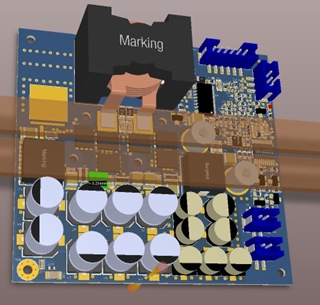
Design and manufacture an MPPT converter with integrated monitoring functions.
Expected Result:
A fully functional prototype of the converter.
Performance Evaluation:
- Determine energy efficiency curves depending on input power
- Measure performance at various input voltages

MPPT Converter Technical Specifications
| Maximum allowable input voltage (open circuit) | 60V |
| Maximum operating input voltage | 54V |
| Input voltage at which the MPPT algorithm starts operating | 9.1V |
| Minimum battery voltage | 5V |
| Configurable battery voltage range | 9.80-30.15V |
| Voltage configuration step | 4.97mV |
| Maximum input current for proper MPPT operation | 15A |
| Maximum converter power when using a 12V battery | 150W |
| Maximum converter power when using a 24V battery | 300W |
| Maximum output current for proper converter operation | 15A |
| Configurable output current range | 0.4-20.0A |
| Current configuration step | 0.4A |
| MPPT efficiency* | >99% |
| Overall efficiency | >95% |
| Operating temperature | -35°C ~ +65°C |
| Converter dimensions without enclosure | 70*75*21 mm |

